
On February 4, 2026, the following news story appears:
“Nestlé expanded its recall of infant formula batches in France and the United Kingdom after the European Union introduced new methods for testing for cereulide, a toxin linked to the incident that had already been detected in its supply chain.”
The news is significant in and of itself, because it involves infant formula, safety, and a product recall. But what’s truly interesting isn’t just the incident itself. It’s what it reveals about how quality has changed in modern industry and about the increasingly critical role of food traceability.
The Changing Context of Regulatory Frameworks
For a long time, regulatory compliance was seen as the ultimate goal. If a company operated within regulatory limits, it could assume it was doing the right thing. Today, that logic no longer holds. Analytical methods have evolved, scientific criteria have been refined, and the ability to detect risks is much greater. In this context, quality is no longer solely about meeting the requirements of the standard at a given moment, but about being prepared to respond when that framework changes.
That is precisely what makes the Nestlé case so revealing. The expansion of the recall did not result from a new, separate crisis, but rather because the EU introduced new methods for analyzing cereulide. The way the problem was measured changed, and that change made it necessary to revisit operational decisions that had already been made. Suddenly, the question was no longer whether the company had responded correctly to the initial incident. What was truly revealed was the system’s ability to reinterpret risk, reevaluate batches, and act with the speed demanded by the market.
Where does the quality system really fit in?
This highlights one of the most important lessons for any industrial organization: The most mature quality systems are not those that simply pass audits, but those that can adapt to regulatory changes without grinding to a halt. Because true quality is not demonstrated only when everything is under control, but when a company must make quick decisions based on new information, amid heightened public sensitivity and potentially global consequences.
Nestlé also maintained that it applied a stricter internal limit than the reference limit subsequently adopted by the EU. This detail, far from being trivial, goes straight to the heart of the debate. In critical sectors, operating under internal standards that are more stringent than the legal minimum should not be interpreted as excessive, but rather as a form of preventive quality assurance.
In the field of infant nutrition, that difference carries even greater weight. When a product affects a particularly sensitive segment, the discussion goes beyond whether or not there has been a formal violation. Market confidence is built on something much broader: the perception that the company acts with prudence, sound judgment, and the ability to anticipate issues. And that requires understanding quality as a strategic discipline, not as a control function situated at the end of the process.
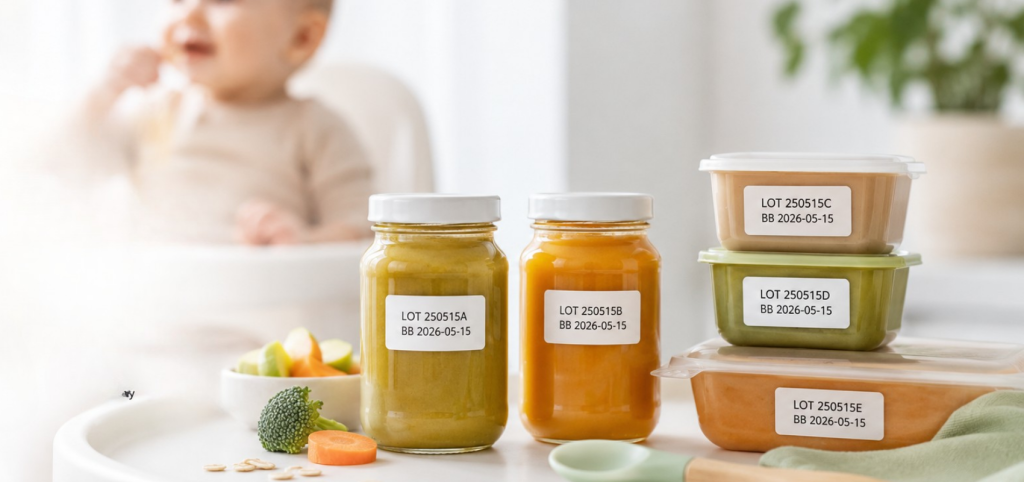
The real vulnerability lies in the supply chain
The second major lesson lies in the supply chain. According to information provided by the company itself, the root cause was traced to an ingredient sourced from a global supplier in the industry. That aspect of the case should serve as an uncomfortable reminder for many companies: the quality of the final product is only as strong as the quality of the ecosystem that supplies it.
It is no longer enough to certify suppliers or review documentation. Nor is it enough to trust that a supply chain will continue to function properly simply because it has never failed before.
What the market demands today is a much more proactive approach to supplier risk. This means knowing who supplies what, what their track record is, what controls are in place, what cross-market dependencies exist, and what substitution options are available if something goes wrong. When a food safety incident occurs, the difference between a prepared company and one that isn’t usually lies in this: the speed with which it can trace the problem backward, isolate its impact, and reorganize operations moving forward.
For that very reason, traceability has become a cornerstone—not only for compliance, but also for resilience. In sectors such as the food industry, food traceability cannot rely solely on manual records or isolated systems. It must be connected to suppliers, batches, raw materials, quality controls, warehouses, production, and distribution.
Many companies still reconstruct incidents based on emails, scattered files, phone calls, and manual review of records. That model may seem sufficient as long as nothing serious happens. But when it’s necessary to recall products, review batches, coordinate across countries, respond to authorities, and explain decisions to the market, the slowness becomes a cost. This is where many companies begin to consider whether they need to move toward food traceability software or quality systems that are more closely integrated with production, suppliers, warehousing, and distribution. It’s not just about digitizing for the sake of efficiency, but about being able to respond accurately when every minute and every batch counts.
What this meant for Nestlé
And that cost, in this case, was no small matter. In its earnings report dated February 19, 2026, Nestlé explained that it had already recognized an impact of 75 million Swiss francs due to customer returns and inventory write-downs related to products sold in 2025.
In addition, it estimated an additional impact of approximately 200 million Swiss francs for the first quarter of 2026 due to returns, stockouts, and restocking. These are significant figures even for a multinational of this scale. And they do not account for a more difficult-to-measure but equally important aspect: reputational damage, pressure on demand, the extraordinary management effort required, and the diversion of executive attention toward crisis containment.

That changes the way we view the problem significantly. Because a recall isn’t just a matter of safety and accountability. It’s also a major economic issue. Every poorly defined lot, every day of delay in identification, every poorly synchronized market, and every decision made based on fragmented information multiplies the impact.
When Quality Also Protects Your Business
That is where digitization and robust quality management software (QMS) stop being seen as merely desirable operational improvements and start being viewed as concrete tools for financial and reputational protection. A digital quality management system alone cannot prevent contamination from occurring at the source. But it can significantly reduce the scope of the problem and the total cost of managing it. In addition, it allows for earlier identification of affected batches, links them to raw materials, suppliers, plants, and markets, enables more precise stock containment, documents incidents in real time, and facilitates coordinated corrective actions across the organization’s various departments.
Nestlé likely already has this type of technological infrastructure integrated into its supply chain. In fact, its ability to detect the problem, trace it, expand the recall, and reorganize production with alternative suppliers suggests a considerable level of maturity. But that is precisely why this case is so useful for the rest of the industry. If the impact was that significant even with the right structure, processes, and resources in place, it’s easy to imagine how much greater it would have been without digitization, connected traceability, and a mature QMS to support it.
That is perhaps the most valuable takeaway for companies in the food, pharmaceutical, and cosmetics industries—or any regulated sector:
Preventive quality is not just a way to reduce failures. It is a way to reduce exposure—technical, regulatory, financial, and reputational exposure. When analytical criteria change, it is not enough to simply have good products. You need systems capable of reinterpreting risk and acting accordingly.
The Nestlé case should not be interpreted solely as an isolated product recall. In fact, it reflects how industry standards are changing in sectors that are increasingly regulated and exposed. Standards are no longer static; science evolves, and authorities are constantly adjusting their criteria. At the same time, consumers expect transparency, speed, and the ability to anticipate issues. In this context, the difference between good and poor crisis management is no longer measured solely by regulatory compliance, but also by trust, economic impact, and responsiveness.
That is why the important question is no longer just who is compliant today, but which companies have built quality systems that are agile, traceable, and interconnected enough to continue responding effectively as market rules change. That is where the true competitive advantage begins.
Content written by:
Xavier Conesa Foix, CGO of Kapture.io QMS
With more than 30 years dedicated to industrial quality improvement, Xavier combines technical expertise and strategic vision to transform quality control and incident management in the plant.


